
For as long as I can remember, most of my pieces never got past the sketch stage, because I was always so terrified that “colouring” them would ruin the drawing.
I tended to stick to line drawings with minimal shading. If I did colour anything, it was usually in large blocks, with little to no mixing, and the image felt flat and unsatisfying.
My images lacked depth. I felt stuck. My art wasn’t progressing, at least not in the way I wanted it to.
It was during a holiday in Tenerife, whilst listening to an illustrator’s podcast (Thoughts on Illustration by Tom Froese), that I decided it was time to go one step further with my art. The host suggested a few books to help, and having already started collecting a few books on technique, one on colour wouldn’t be amiss.
So, I started with the basics. I learnt to texture and shade pencil drawings, using nothing more than a simple graphite stick. This way, I was sure that the contrast worked. Some worked, some looked terrible, but all attempts allowed me to grow in confidence. Once I felt more confident with graphite, I knew it was time to challenge myself with colour properly.
So much so that I decided to teach myself how to paint with watercolour. It seemed like a medium where I couldn’t escape colour, shading and texture. Like with everything, the first attempts were less than satisfactory (you can read about that here), but I was determined to take my art to the next level.


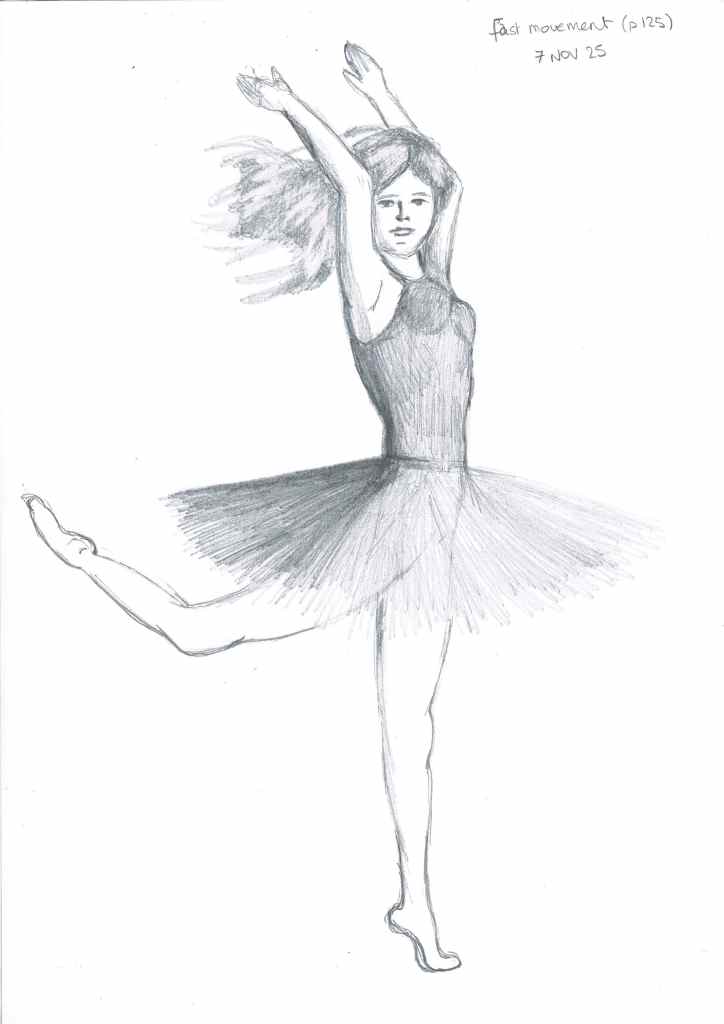
After navigating without much direction and not really knowing how to push my art further, I decided to return to school and train professionally as an illustrator.
That’s where I first discovered digital drawing. And it wasn’t as easy as I imagined it to be. I couldn’t draw on my graphic tablet as I do on paper. To start with, my creations were amateurish.
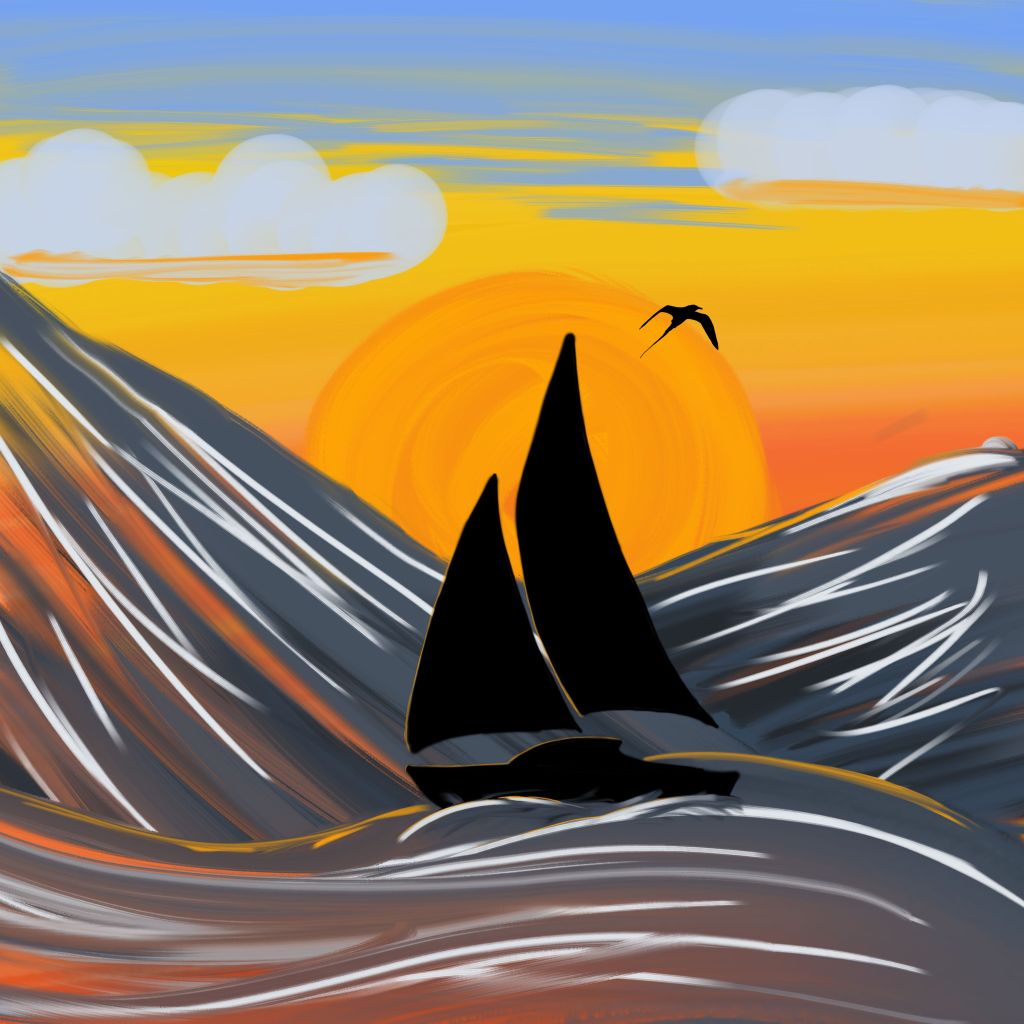
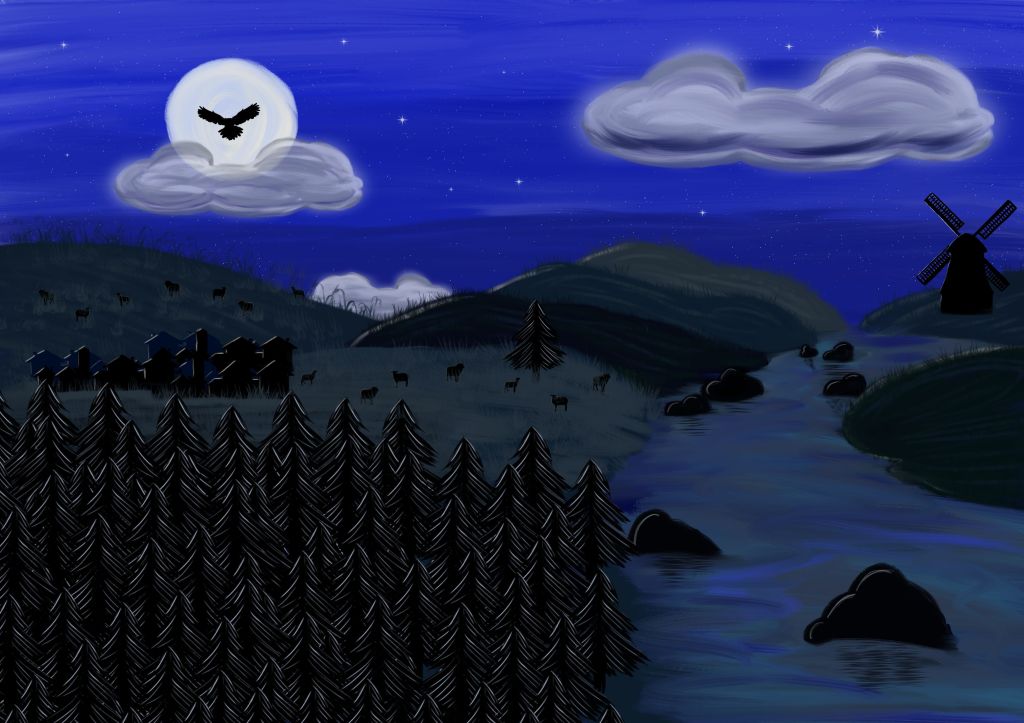
The brushes, despite claiming to mimic traditional media, don’t behave the same way. To this day, I still find “digital watercolour” almost impossible. And it really frustrates me, as I know there are so many ways to use it to make a beautiful illustration.
Layering digitally is a whole different skill set from layering with paint. I’m still learning how to layer digitally. To be honest, I am still learning both processes, because art is about constant learning and evolving. I love how different they are.
But I find digital layering particularly hard because only a few brushes let me mix colours to create a natural-looking gradient. The only way I’ve found is to constantly change the colour ever so slightly, but the process is long and somewhat tedious.
Maybe there’s a better method out there — I just haven’t found it yet!
I’ve found, however, that even if I am drawing digitally, I prefer to keep an organic, traditional feel to the piece. I tend to lean towards brushes that mimic traditional media, such as chalk or coloured pencils, brushes that add texture to blocks of colour. However, I spend hours sometimes testing different brushes before I settle on the effect I want.
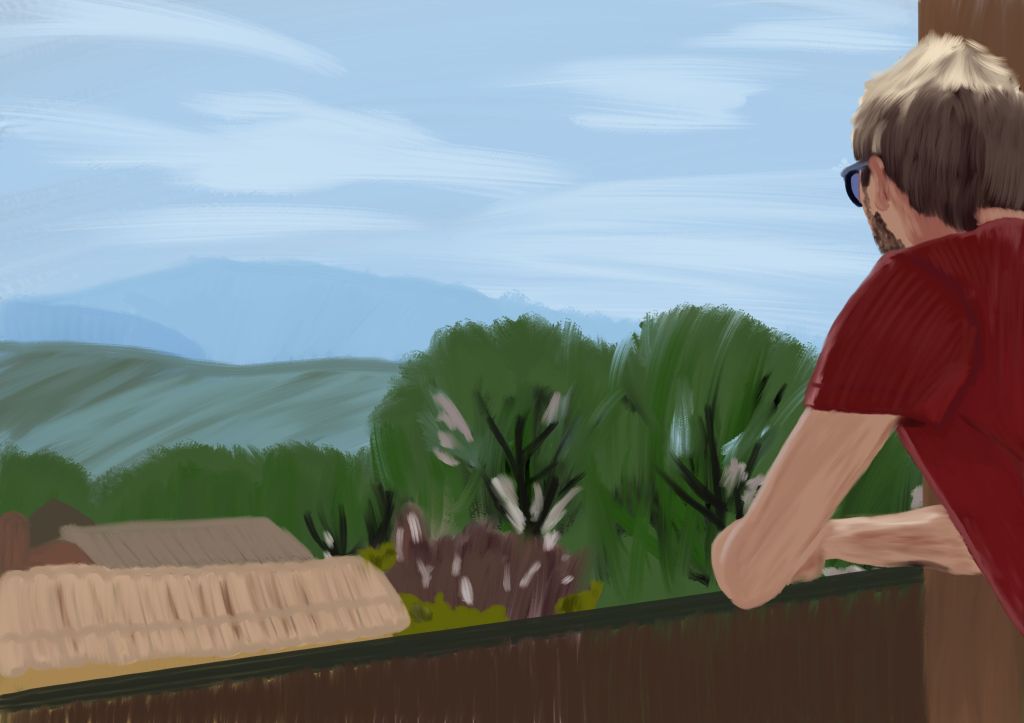

On the other hand, I find that my perfectionism kicks in much more with digital artwork than with traditional art. With traditional media, mixing colours is half the fun, and sometimes you don’t quite end up with the colour you wanted, but it still works. Digitally, you have access to every colour imaginable, so choosing which is the best colour can be almost impossible.
The biggest problem I have with digital drawing is the endless possibilities. When I start a digital drawing, I often feel overwhelmed by the colours and the brushes. When I use traditional media, I have an HB pencil, then I pick up either my watercolours, gouache, acrylic paints, oil pastels, or coloured pencils. Sometimes I might mix different media together. I might even scan the line drawing in case I want to use two different mediums. But I am rarely stuck in front of a blank page for long before knowing in what direction I want to go.
I’ve decided, at least where the brushes are concerned, to stick to the same few brushes until I feel comfortable and confident in using them, and that the artwork I produce feels of quality. As for colours, I still find it hard to choose. Although I do try to limit my palette as much as possible, the temptation is there — that constant nagging feeling that there might be a better colour.
The beauty and the vice of digital art is that in the click of a button, you can undo something and start again without losing everything else. There are no happy accidents when drawing digitally, at least not for me.
Something I do love, however, is to combine traditional and digital. I love to enhance traditional pieces digitally. Sometimes that means testing a composition before painting, or adding small details digitally to see whether they enhance or ruin the piece.
Personally, I couldn’t illustrate 100% digitally. I find my sketches aren’t organic enough when I draw directly on my graphic tablet. There’s something satisfying about crossing out ideas, seeing the way an idea progresses. Something I miss digitally, because I have a bad habit of deleting old sketches for the same project. Something I am trying to remedy. But digital media has its place in the art world. There’s something incredible about being able to perfect a sketch digitally after it’s been drawn on paper.
All of this, the textures, the limitations, the unpredictability, is precisely what I try to bring into my digital illustrations. I’ve still got a lot to learn about all art media, whether it be traditional or digital. There are, unfortunately, not always enough hours in the day to experiment as much as I’d like to. Resting on one’s laurels is very tempting, but we must strive to continue learning. Our art will thank us for it.
Do you prefer working digitally or traditionally? How do the two worlds influence your art? Let me know in the comments.
If you want to follow my journey as I grow as both a children’s book illustrator and a thriller author, sign up for my newsletter here.






 The Book Bump
Leave a comment