Not every illustration starts with a spark of inspiration. Sometimes, it starts with a brief. At first glance, a brief can feel restrictive, but I’ve come to love the challenge. These character designs began as part of my coursework, built around a specific brief. But even with constraints, there’s room for creativity, imagination and your unique artistic voice.
The assignment: produce illustrations that will be used as the basis for creating the whole graphic universe of a new game called “Juliette discovers the skate park”, which is aimed at children aged 8 to 12 years old.
In this first part, I needed to create the characters, Juliette, Achille and Gaston. The next part of the assignment will be to create visuals for the skate park itself.
The brief detailed each character a little.
Juliette is 10 years old, she’s dynamic, adventurous, smart, mischievous and loves skipping school to hang out at her local skate park.
Achille, also 10 years old, is her best friend. He is more sensible than Juliette, intelligent, and a very good student at school, though he likes to follow her on all her adventures.
Gaston is a pigeon that accompanies them on their adventures and shows them his world.
From these descriptions, I must create the character designs that animators will later animate. In other words, the illustrations need to show each character from all angles, capture their personalities, and convey their body language.
But the beauty of working with briefs. Turning words into illustrations is magic.
To start, I picture what someone with those traits would look and behave like. My initial sketches often start with obvious traits — the simplest visual ideas — before I push them into something more unique.
For example, Achille is sensible, intelligent and a good student, so I might sketch someone with glasses, a more rigid posture – perhaps a little square, maybe a book in one hand, something “geeky” on his t-shirt.
Juliette seems looser, more free-spirited, so I may imagine messy hair, someone skinny, supple, round, and graceful in her movements.
Gaston is a pigeon, so the challenge is to create a humanised animal that fits with the style of the other two characters.
Once I have a feel for their personality and physical shape, I start thinking about colour, because colours carry meaning too.
So, for Juliette, I imagine purples (mystery, imagination) and orange (warmth and vitality). For Achille, greens (tranquillity) and blues (calmness, professionalism) seem to be most appropriate for his character.
The first stage is rather messy. Lots of tests, lots of “rubbish” drawings. In this stage, I always use a pencil and paper.
Most of the time, the first drawings are never satisfying. They look too old, too stiff, too flat. But each drawing, however “bad” it might seem, is inevitable and indispensable in creating the first drafts of the character.
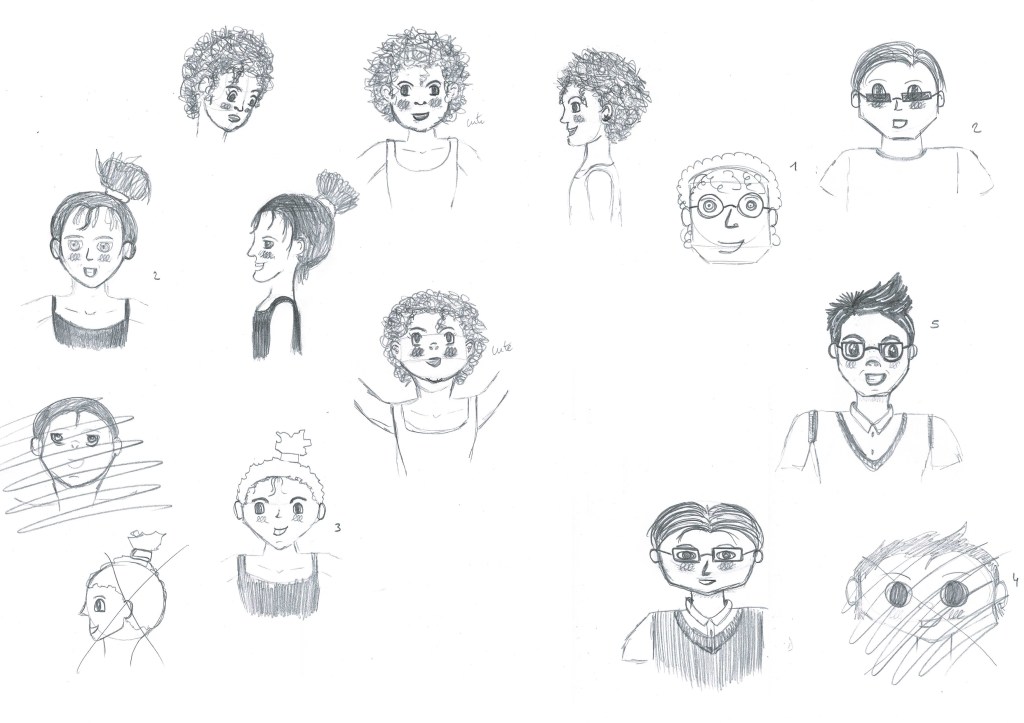
Once I’m happy with the head, I start on the body. I try lots of poses before settling on the ones that seem most fitting for the character’s personality.
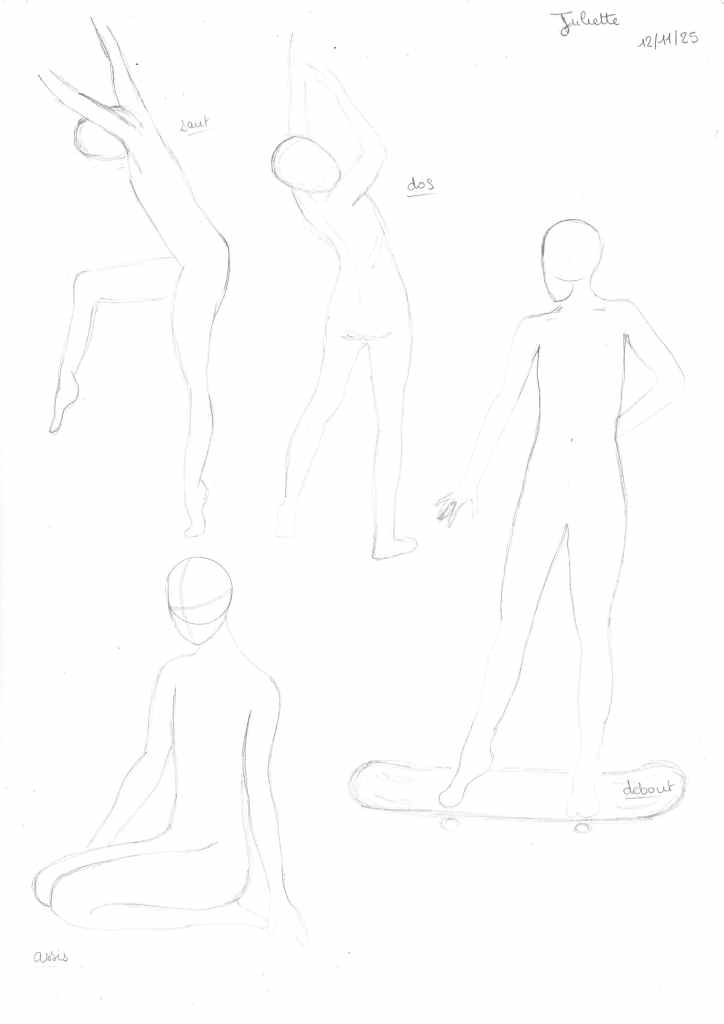
Then, details such as clothing and accessories are added to the body poses. I usually do this stage on my drawing tablet, as it lets me try an infinite number of combinations without having to redraw the body and head each time.
Finally, I end with colour tests, which I also carry out on my graphic tablet. Depending on the assignment, I’ll sometimes print the sketches and colour them in with traditional media. It all depends on the style I’m looking for.
For this specific brief, it is more common for character designs to be drawn digitally, as they will later be animated, than drawn traditionally.
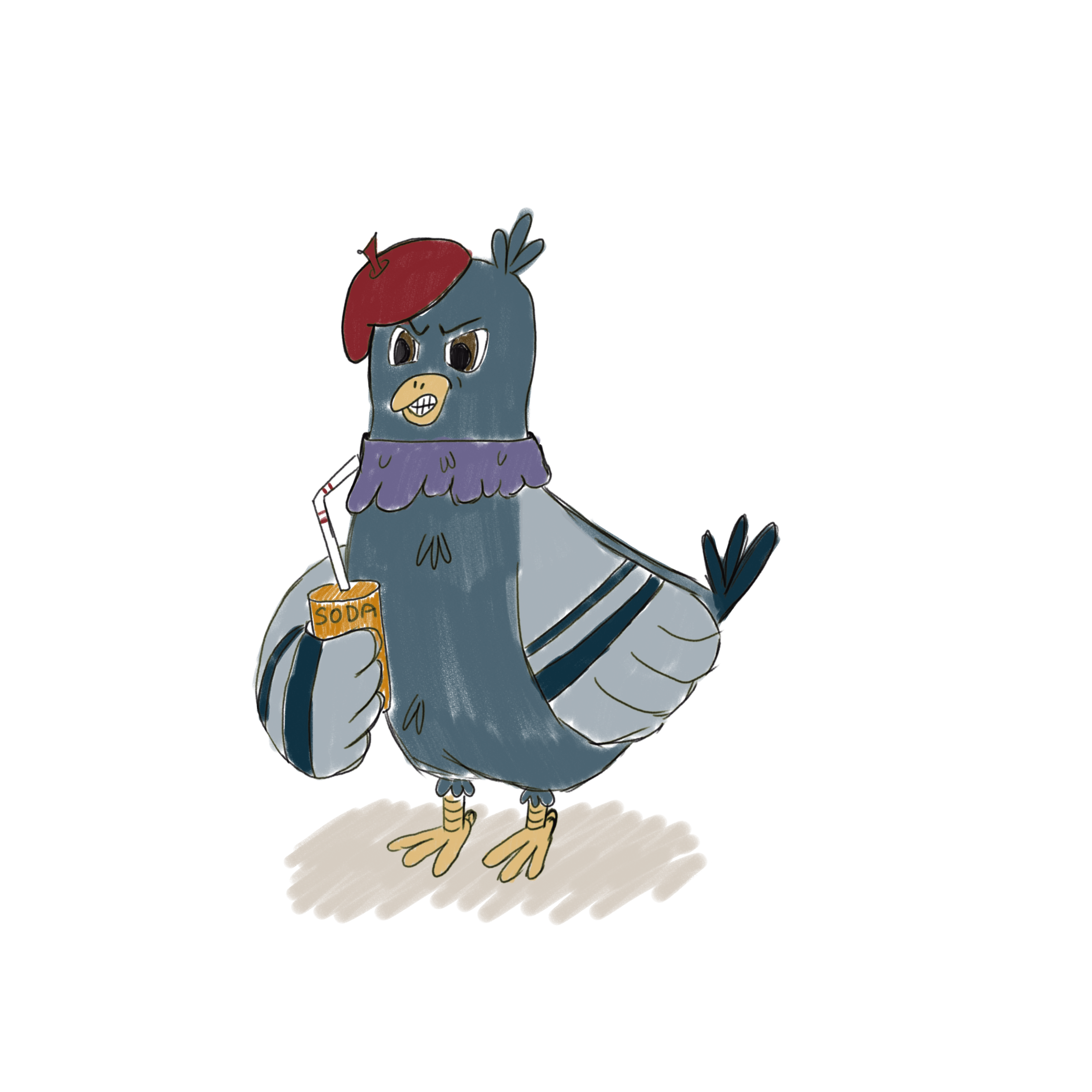


Once I’m happy with all the elements (face, body, proportions, poses), I must decide how I want the final illustration to look. What style are we going for? Character design for a video game isn’t the same as that of a children’s book.
For this assignment, I stuck to my drawing tablet. I’ll test different digital paintbrushes until I find one that suits the style I’m aiming for. I find that the colouring stage is the longest of all the steps in my process. For example, I’ve spent 9 hours on Juliette. Almost half of that time went into colouring this one pose.


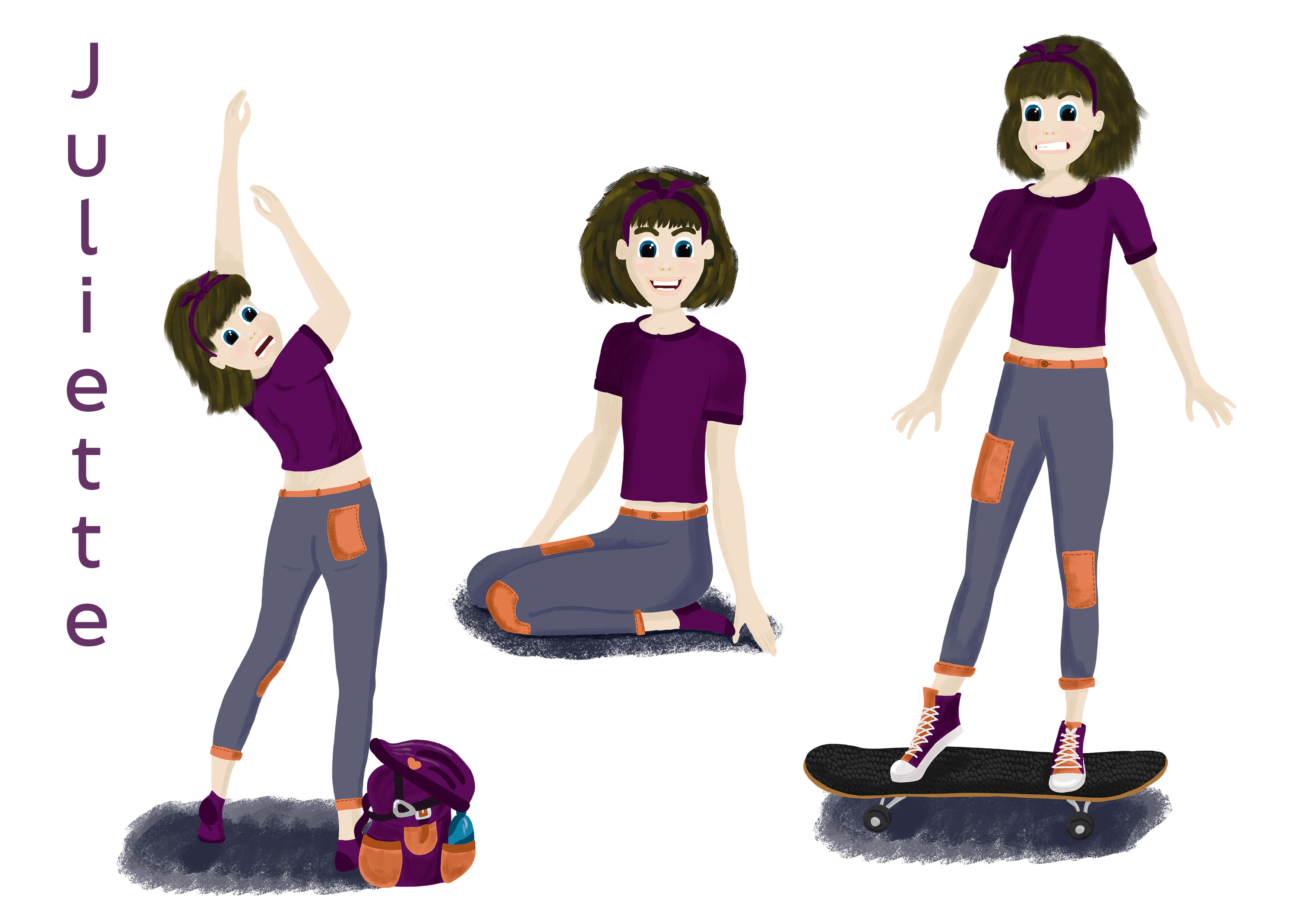
I spent 44 hours on this assignment:
- 15 hours on Juliette.
- 11 hours on Achille.
- 11 hours on Gaston.
- 5 hours on research, exploring ideas, and rough sketches
Illustration takes time, far more than people might expect. The journey from brief to final illustration is long but rewarding. There’s something magical when you see your creations come to life on paper (digitally or traditionally).
If you enjoy these behind-the-scenes looks at my illustration journey, let me know what part you’d love me to share next: sketches, colour tests, more finished art…
And if you’d like to follow along as I grow as both an illustrator and author, you can sign up for my newsletter here.







 The Book Bump
Leave a reply to Reflecting on 2025: My Writing, Illustration and Creative Growth – The Book Bump Cancel reply