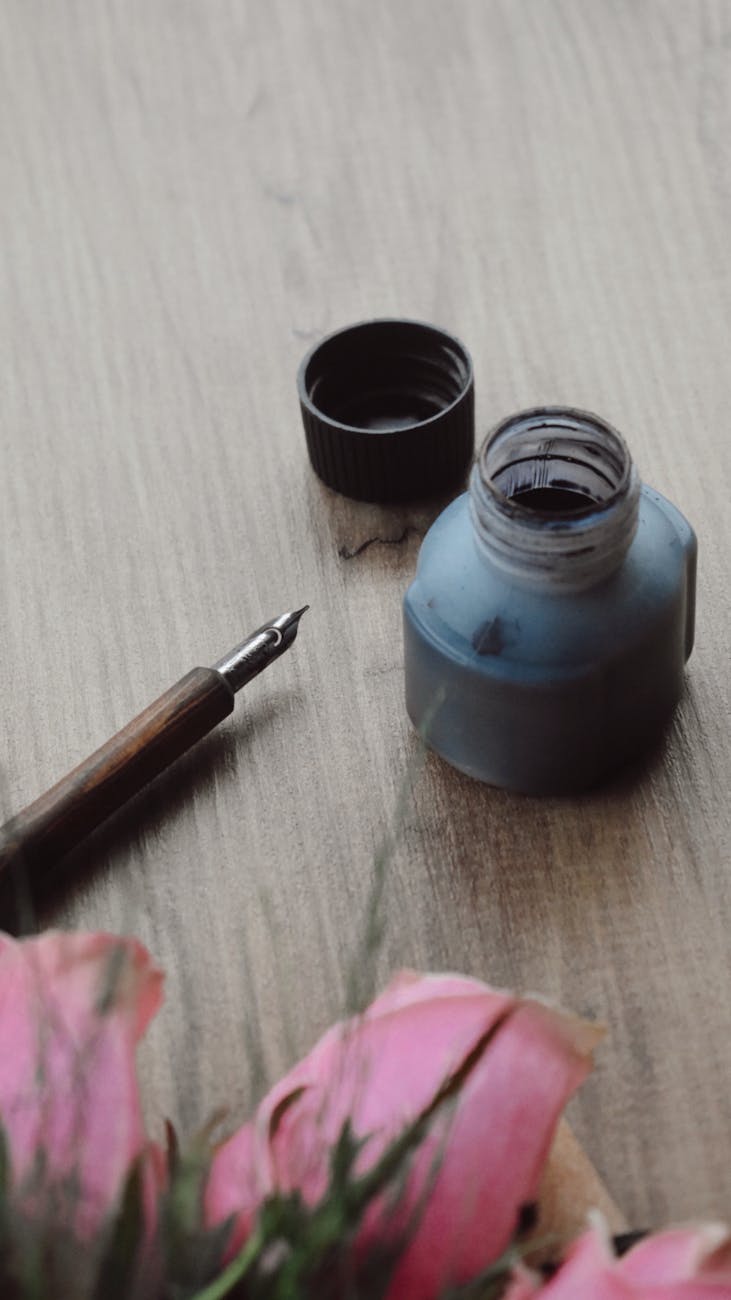
I can imagine this is how superheroes feel when they must balance their two identities, especially when both are stark contrasts.
I have two creative identities. I am an illustrator and an author. I sometimes find it hard to admit this aloud, despite the physical proof supporting the titles. My illustration work is forthcoming in the 3Elements Review Summer issue, and I published a full-length novel six months ago.
If I am totally honest, the urge to erase the above paragraph is strong. Or at least the urge to modify the titles to “illustrator in training” and “self-published author”. It requires a lot of inner strength to remove the unnecessary qualifiers.
So, I’ll say it here, loud and clear: I am a published illustrator and author.
But let’s get back to the topic: juggling both identities.
It requires a lot of brain flexibility but also structure to be both an illustrator and an author. Perhaps it doesn’t seem so unusual until I mention that my illustration universe is aimed at young children, while my writing is for avid readers of dark, psychological thrillers and social noir.

My studio is set up so that there is as little overlap as possible between the two identities. I have a Writer’s Desk and a Painter’s Desk. One is neatly stacked with pens, notebooks, and my laptop and extra screen, the other is covered in paint and overflowing with brushes, pencils, paper and all sorts.
But that doesn’t always stop the two worlds from colliding. And having a creative hangover is a productivity killer. I’m still learning how to balance the two, effectively, so that my brain has time to shut off the “rigidity” of the author brain and tap into the “chaotic” painter brain.
Some have asked why I don’t just stick with one. Because they are two parts of the same person. Like Yin Yang in Eastern culture, they are two complementary forces that make up all aspects of life. For me, writing represents darkness, while illustration represents the light.
What does a typical day for me look like?
Around 9:30 AM, I arrive in front of my writing desk, with a cup of tea and my headphones. I open my latest WIP and blast instrumental music into my ears to cut myself off completely from the world. I used to be able to listen to any music, but recently, I’ve found that lyrics distract me too much from the words on the page.
I dedicate the morning to all things writing: drafting, research, brainstorming plot points… refreshing my submittable page (because can we call ourselves authors if we aren’t obsessed with our stories out on sub?).
Up until recently, I allowed myself only one hour, first thing in the morning, to write. While these sessions were often very productive, often hitting 700 to 1,000 words, I found myself unproductive for the rest of the morning. I required at least twenty minutes, if not longer, to completely turn off the writer brain and tap into the illustrator vibes. But I’d still find my mind wandering to different plot points I needed to sort out.
Now, I allow myself the entire morning to write. Using the lunch break, and sometimes a 30-minute run, as a buffer. My brain has enough time to dwell on what I put my characters through, then move on to something else.
I return to the office around 1:30 – 2 PM, but this time, I sit in “my studio”. Unlike the writer’s desk, which houses only my laptop, an extra screen, and pens and notebooks, the studio is a desk filled with pencils, paints, reference books and sketchbooks. It is stained with the journey of my practice.
Sometimes I start my afternoon practice with a warm-up piece. A quick 30-minute sketch to loosen up my fingers. Sometimes I might browse Pexels for inspiration.
I then devote the rest of the afternoon to one of my current projects. Often, I’ll be working on school assignments as I look to finish my training before the summer break. I do have a few personal projects that are slowly taking shape, and occasionally, they scream for my attention.
I pack up between 4 and 5 PM, depending on whether it’s my turn to pick up the kids.
I return to the office after the children have gone to bed at least three nights a week, for another 90 minutes. Evenings in the office are less strict. I sometimes try to write my blog posts or newsletter during these evening sessions, as I feel I am not taking anything away from my top priorities. Sometimes I just browse the internet, looking for a home for my creative work.
How do they influence each other?
Learning to translate words visually has greatly improved my sensory details in my writing. I find myself looking for colours and textures more when I write. Even when the characters are in mortal danger, I still try to ground their situation in two or three of the five senses. This is something I only started doing in the fourth draft of my debut thriller, which incidentally coincided with my starting to teach myself to paint watercolour. Now, I am including these details in first drafts.
On the flip side, writing has not only helped me build narrative in my visual work, but also rhythm. Capturing an instant is easier when you can imagine everything that happened before and what might happen afterwards. The dark subject matter I explore in writing also allows me to play with darker, scarier textures and colours, even in children’s illustrations, that I might not use otherwise.
I’ve come to realise that for something to work, whether it’s a whimsical illustration or a gritty social noir, it must be balanced. It needs both light and dark. It needs both misery and hope. That’s not to say they must exist in equal quantities.
But for something to truly shine, it needs darkness. And for something to truly be dark, it needs to have had light.
Sometimes, as creators, we feel we have to “pick a lane” or stay in one mood, for fear of being seen as unstable, uncommitted or perhaps a hobbyist. I disagree. For me, switching things up every so often, having palette cleansers, is exactly what I need to keep doing what I love without burning out.
Do you have a ‘palate cleanser’ for your work? How do you balance the dark and light in your life? Drop a comment below.
Loved this peek behind the curtain?
Join the inner circle
If you want to follow along as I navigate the slow, intentional journey of a thriller author and illustrator, pull up a chair. Sign up for Studio Notes and Stories to get cozy studio updates, raw sketches, and writing insights delivered straight to your inbox.
And if you’re ready for the dark side, you can find my debut thriller here.




Leave a Reply