There is nothing quite so humbling (and scary) as sending your best piece of short fiction off to a literary journal.
You pour your heart and soul into every word – 500, 1000, maybe 3.5K. You spend minutes, hours, weeks, perhaps even months perfecting your story. You type The End. A wave of euphoria washes over you. You did it. You finished the story. It’s beautiful. You marvel at your own skills as a storyteller. Perhaps you show a friend or a family member, hovering in the background, chewing your nails, while they read it.
“Well?” you ask, spitting out a bit of skin before going in for more. Because you know there is one way a loved one will answer that specific question.
They’ll say, “It’s good!” or “I like it.”
But what you have to listen out for is the intonation with which they said it. Was their voice filled with false enthusiasm? A hint of sarcasm? Or did they truly enjoy what you wrote?
The Masterpiece and the Big Guns
You head back to your desk with more answers than questions. You start researching how to know if your writing is any good. You stumble upon a website that mentions literary journals. You do more research. The cogs in your brain start turning. Maybe your piece is good enough to pass a slush pile. Seeing your name in a journal byline has become the new dream.
You open your masterpiece and reread. The horror! It’s not as good as you remembered. You edit again, ensuring every word and sentence pulls its weight.
Because flash fiction and short stories aren’t vignettes, they are complete narrative arcs, with a beginning, a middle and an end.
After another round of edits, you decide it’s done. You are somewhat pleased with what you’ve written.
You research journals and their submission policies. Each has unique guidelines—time to bring out the big guns: Spreadsheets.
You build a comprehensive submission table with a listing of every last detail of all the journals you want to submit to.
But there’s one element you’ve been putting off. You see it appear in almost every guideline you check. The thought of writing makes you cringe.
A third-person bio.
You want to sound as professional as possible, without coming across as pompous. But what do you put in it when you haven’t got any credits yet?
You spend hours condensing your third-person bio into fewer than fifty words. The fewer the words, the harder it is to choose.
Wrestling the Mastiff

Finally. You’re ready to hit send on your submission. Maybe you say a prayer, maybe you cross your fingers, perhaps you reach for your lucky pen. A hint of a smile hovers on your lips, your cheeks twitch.
Everything is ready. All that’s left to do is hit send. That big orange button at the bottom of your screen. You take a deep breath as your heartbeat quickens. Blood rushes to your ears. Your index finger hovers over the left side of the mouse.
That dreaded question flashes in the forefront of your mind. Am I good enough? Followed swiftly by Imposter Syndrome.
You’re a hobbyist, it’ll whisper in your ear. Don’t waste their time. They receive enough submissions as it is.
Your hand guides the mouse to the X in the top-right corner of your screen. You pause. Your head tilts.
What if I am good enough?
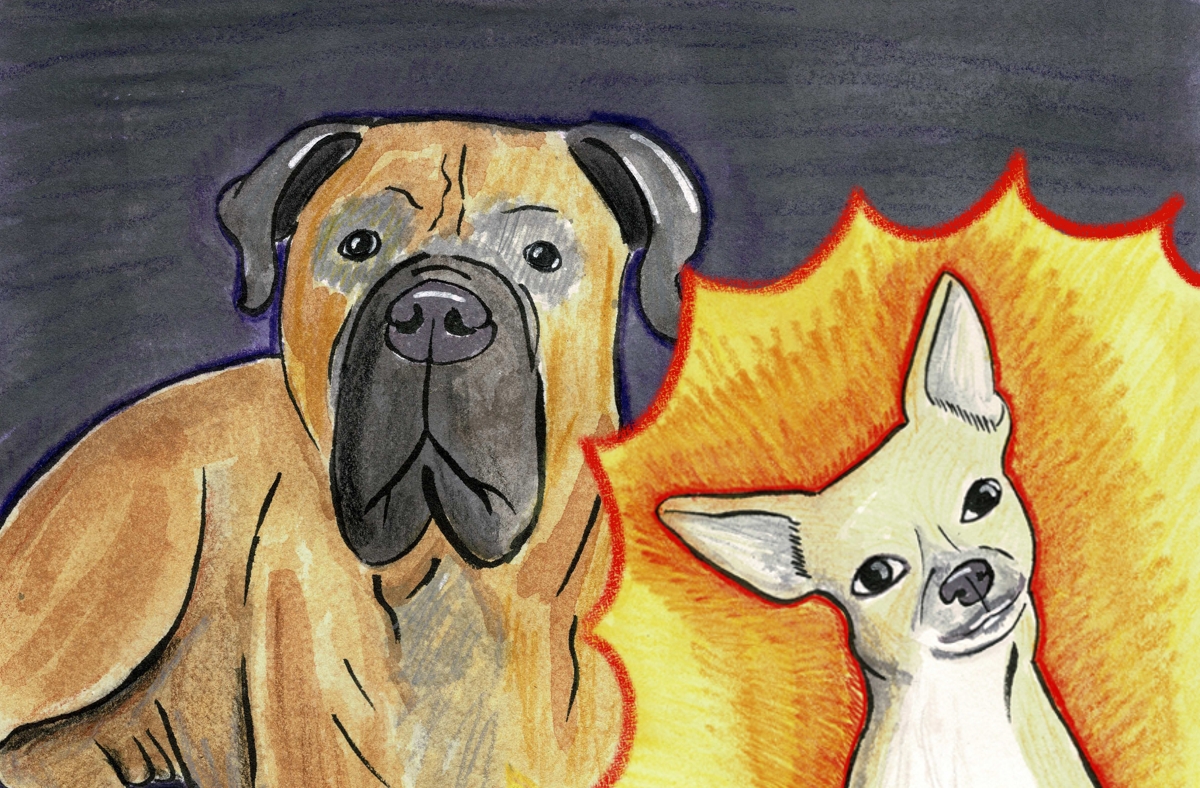
Wrestling with Imposter Syndrome is like trying to leave the house, but your English Mastiff has decided it wants to nap on the welcome rug instead. You try reasoning with it, bribing it. It won’t budge. It’s here to stay.
The only thing left to do is either step over it or stay trapped with it. Panting and slobbering. Never allowing you to forget its presence.
You take a deep breath. The cursor hovers over that orange button again. You close your eyes and hold your breath. One. Two. Three. Click.
Whoosh.
You’ve sent the submission rocketing to the bottom of a slush pile. Your skin tingles all over, and your hands tremble. You’ve never felt so brave or so bold in all your life.
You stare at your computer screen a little longer. Maybe you crack your knuckles, stretch out your shoulders. You check the clock.
Enter Digital Purgatory
Now what? That is the ultimate question. What do you do while your piece is frantically treading water in a slush pile, hoping to keep its head above the rejection waves?
You close your browser. Tea? Coffee? Maybe just a glass of water. I don’t think your body needs any more caffeine for now.
A walk to clear the mind. The world seems different. Brighter. More vivid. Your nerves are still a little frayed. That English Mastiff isn’t far behind.
You fall back into your daily routine. You even manage to forget that you sent your masterpiece to your dream journals. Well, almost.
You check the clock again. A few hours have passed. You check your inbox. You reread the email confirming the journal received your submission, with a promise to get back to you within 2 weeks, 90 days, or 6 months…
Your stomach twists. There’s a gaping hole in your life where the story used to sit… the time spent writing it, polishing it, what are you meant to do with that now?
You could start another story, but your mind is still basking in the glow of the old one. Daily life feels mundane. Boring. You are above the humdrum now. You’ve put yourself out there. Your nerve endings are on fire. Everything feels different.
But now there’s a crater the size of a micro world to fill, and you can’t sit at your desk twiddling your thumbs for the next four thousand three hundred and eighty hours.
You open your submission browser. It’s easy to access; all sensible writers tab it among their favourites. The title of your story sits next to a sea of navy boxes.
Received.
You square your shoulders. Submit and forget, that’s your new mantra. You repeat it every time your fingers twitch when the mouse passes over the favourites tab. The website sits on a pedestal, taunting you. Its siren’s call is nigh impossible to resist. But, like Ulysses with his ropes to hold him back, you have your resolve. You won’t refresh the page again.
Not today.
But you do.
A few more hours pass, and you’re staring at that sea of navy boxes again.
Routine. A fixed schedule. You make a pact with your computer that you will refresh the submission page only once a day, at the same time each day. But what’s the best time to refresh?
In the morning? But that could potentially ruin the vibe of the whole day.
In the evenings? But then your brain will be playing all the possible scenarios until sunup.
Midday? Instead of doomscrolling on your favourite social media, you decide to refresh the browser until the internet breaks.
But still, that doesn’t fill all the time you now have available.
There must be something else you can do. There must be some way of trying to navigate this never-ending ocean.
Welcome to the Data Rabbit Hole
That’s when you stumble upon the data websites. Mystical websites where other writers log their submissions, their rejections, and acceptances (although there’s never more than a handful sprinkled here and there).
Average response times, graphs… Data!
Now we’re talking.
You log all your submissions on these websites and track your little dot in the overlapping histograms. Waves of red, like mountain peaks, before you reach a prairie of green. You try to discern patterns. When are the most likely days of receiving a rejection? Now that I’ve passed the fast rejections, what are my chances of acceptance?
Because with each passing day, your heart dares to hope a little more. Each dreaded day of silence, you dare to believe that what you wrote really does have the goods.
Hours turn into days, which slowly turn into weeks.
You find a somewhat rhythm. You almost keep your promise to only check the submissions once a day, but sometimes it’s more than you can bear, and you go into a frenzy of checking every hour or two. Usually, on days you know there’s a spike in rejections.
You open your submissions browser and your heart rate spikes. Heat floods your cheeks. The little navy-blue box has turned cerulean: In Progress.
You are in shallower waters now. Someone at the literary journal has manually touched your submission.
You frantically search the web for information on what this means. But the World Wide Web is surprisingly devoid of answers. You check back on the data websites, but there is no data for this.
You enter unknown waters without a map, a compass or even a paddle. You float aimlessly, not knowing what to do.
That English Mastiff, called Imposter Syndrome, reappears, but this time, he thinks he’s a lap dog. His weight crushes you. You can’t do anything without being constantly reminded that one of your stories is being scrutinised by a professional editor.
You don’t know if your nerves can handle this kind of stress.
The day passes without an email. You let out a slow sigh, although it sounds more like a strangled last breath.
The Landslide
More days pass, and the initial panic of that change in colour passes. You remind yourself you’re in it for the long haul. Then you’ll be sitting at your desk, on your commute home, or in the shops… your telephone vibrates. You’ve got mail.
Blood rushes to your ears. Your heart drops, and your stomach lurches.
Dear writer, Unfortunately…
It begins. Your shoulders sag. Your first rejection stings more than that time your high school crush turned down your invitation to prom.
While we enjoyed… Not quite right… Thank you for sharing… Best of luck.
It is the first, but it sparks something… a landslide of rejections follows. All of them are versions of the same email. You understand. Literary journals receive thousands of submissions per window, and they can only comment on pieces they really loved.
You open your story. You haven’t looked at it since you hit send. What do you do now? It’s round one, and you’re already on the floor, clinging to the ropes for dear life. You hang your head in shame. That English Mastiff is slobbering in your ear, licking the sweat from your face.

Release the Chihuahua
But a yapping pierces the Mastiff’s heavy breathing. Standing beside you, hackles up, tail wagging frantically, is a Chihuahua. The only thing holding it back from having another go at the Mastiff is a leash. You can’t see where or what it is attached to. But you can see the fire in its eyes. The determination.
You unclip the leash. You hold your head up high.
The Mastiff might have got the better of you this round, but you’ll come back fighting, with a stronger draft.
But first, you take a few days to nurse your bruised ego. You process the rejection as data, because that’s all it is. Data, not a label. And it’s not a reflection of your craft or your skill. You avoid the word “talent” because, to you, it implies that words come easily and without effort. It negates the countless hours spent behind your computer screen rewriting sentences. The time spent reading like a writer and learning from all those who came before you.
No, you aren’t talented. You are skilled.
You earned your craft. And like any craftsman, you continue to hone your work until it finds its audience.
You open your Word document. You reread your story. With fresher eyes, you can see what’s not working. Perhaps you leaned too heavily into overused genre tropes. Maybe there’s too much backstory. Maybe you didn’t arrive late enough. Perhaps you didn’t leave early enough.
But you knuckle down and kill those darlings. You remove filler words and that pesky crutch word. You splice adverbs. You are left with the same story, but much tighter and more impactful.
You give yourself a day or two to let the story marinate before sending it out to more journals. You read somewhere that some writers aim to “collect” at least 100 rejections a year. You’ve also heard of a thing called rejection bingo.
This time around, you are silently more confident. You still wrestle with the English Mastiff, but the Chihuahua yaps loud enough, and the Mastiff vacates the welcome rug.
You bask in that small victory. Instead of continuing despite Imposter Syndrome, you managed to push it aside and silence it.
You pat the Chihuahua on the head and head out confidently into a new sea of navy-blue boxes. You check all the data, but this time around, it doesn’t feel quite so daunting. You’re a veteran now. You’ve already gone one round. The second round is bound to be easier.
Close, But No Cigar
Then that dreaded email hits your inbox again. Another rejection. But this time, the wording is different.
Thank you for sending… Really enjoyed your story… much to admire… send us more to consider soon…
You fall to your knees. This rejection almost hurts more than the standard form rejection. You realise how close you are. You’re almost there. You can see the light at the end of the tunnel. It’s just out of reach.
Why? Why? Please, won’t someone take a chance on a writer who wants to be more than just a hobbyist?
2-0 to the English Mastiff.
You return to your desk. You look at the story. You’ve submitted it to five different journals. The result: four form rejections and a personalised rejection.
Should you retire the story? Maybe you don’t have what it takes. Your hand hovers above the right corner of your laptop screen. You hesitate. Time to call it a day. You go to close the computer.
But… The Chihuahua yaps at your feet. He’s ready to go again.
Best of five.
You send the story to three more journals. But with your track record, you’re already bracing yourself for another bout of rejections. Days pass. You haven’t even checked the data. What difference does it make?
The Sweet Torture of “Yes”
You’re sitting in the park, watching your children ride their bikes and kick a football around. Your telephone vibrates in your pocket. Another email. Your heart drops a little, because let’s be honest, even when expected, rejection still hurts.
Great news!
Your eyes widen. Your heart rate spikes. Butterflies flutter in your chest. Your body begins to shake.
We will be happy to publish it.
A shriek escapes your lips as tears prickle your eyes. You did it. An editor read your work and believed you had the goods.
You do a little happy dance right there, in the middle of the park. You don’t care who’s looking. Nothing could ever come close to this feeling. You’ve backed yourself since day one, even when others have put you down and belittled your achievements.
You finally did it. You proved yourself to the world, but most importantly, to yourself. The Chihuahua yaps with glee at your feet.
You’ve got a publication date to add to your calendar. Another long wait, but that torture is all so sweet when you know you’ll see your name on the byline.
But the English Mastiff lurks in the shadows. Observing you. Daring you to tempt fate.
Because, after all… perhaps it was only a fluke.
Loved this peek behind the curtain?
Join the inner circle.
If you want to follow along as I navigate the slow, intentional journey of a thriller author and illustrator, pull up a chair. Sign up for Studio Notes and Stories to get cosy studio updates, raw sketches, and writing insights delivered straight to your inbox.




Leave a Reply